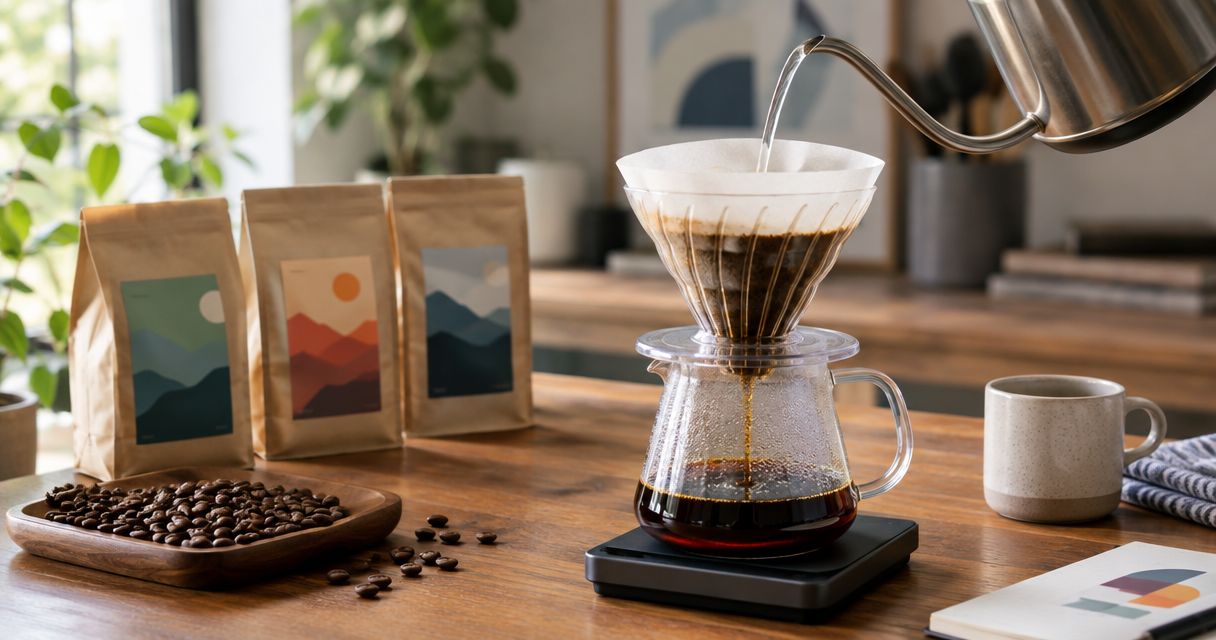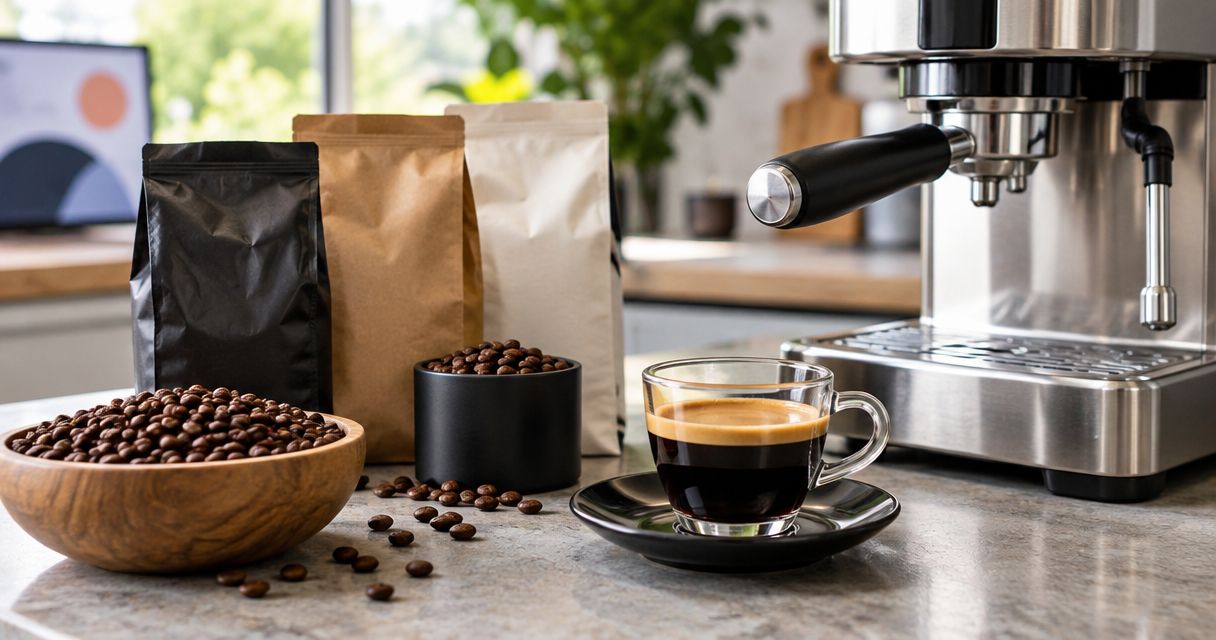
Best overall: 6 Bean Blend for a dark-roast espresso routine. Best for a medium-dark blend: African Espresso. Best for a brighter cup: an unflavored, medium-roast single-origin coffee. The best whole bean coffee for espresso machines is the one whose roast fits your taste and whose listing confirms a whole-bean option. Check that option before ordering either named blend; the available product descriptions do not confirm its grind format.
- Best whole bean coffee for espresso machines: start with 6 Bean Blend if you want a dark roast and can select whole beans.
- Choose African Espresso for a medium-dark blend; its listed origins are Kenya, Tanzania, and Ethiopia.
- Choose an unflavored, medium-roast single origin when you want to notice more of one coffee's character.
- Neither named blend's supplied description confirms whole-bean availability, so check its current options before ordering.
Why this matters
An espresso machine concentrates the choices you make before brewing. Roast preference matters, but so do the grind setting, the amount of coffee in the basket, and whether you can grind the beans just before making a cup. A bag labeled espresso does not solve those decisions for you.
For a home routine in 2026, start with the taste you want to repeat. Cinder and Cedar Coffee Roasters sells blends and single-origin coffee, giving you more than one direction to consider. The distinction in this guide is practical: choose a dark blend for a darker-roast preference, a medium-dark blend for a different roast starting point, or a medium-roast single origin if you want to compare how one coffee tastes on its own. Confirm the format on the current listing before treating any of them as a whole-bean purchase.
What makes the best whole bean coffee for espresso machines?
Use these criteria before looking at a bag's name. They help you choose coffee you can brew again tomorrow, not just coffee that sounds suited to espresso.
- Confirmed whole-bean format: Your grinder needs beans, not pre-ground coffee. Select a whole-bean option on the product listing rather than assuming every coffee is sold in that format.
- Roast you enjoy: Dark and medium-dark are distinct starting points. Neither is required by an espresso machine; your preferred taste decides which belongs in your daily cup.
- A clear flavor direction: A blend gives you a defined combination of coffees. A single origin gives you one origin to explore. These are different buying choices, not quality grades.
- A workable grind: Espresso needs a fine grind, but the right setting depends on your grinder, beans, machine, and basket. Expect to adjust it when you change coffee.
- A repeatable routine: Keep the same basket, dose, and target yield while changing one variable at a time. That makes a disappointing cup easier to diagnose.
- An honest product description: Check what the listing actually says about roast, blend, and format. Do not infer tasting notes or whole-bean availability from a product name.
Choose by roast first, then confirm the format. A coffee cannot be your best whole-bean pick if the option you order is ground.
The picks at a glance
| Pick | Best for | What sets it apart | Key limitation |
|---|---|---|---|
| 6 Bean Blend | A dark-roast espresso routine | Described as a dark-roast house blend suited to espresso | Whole-bean format is not confirmed in the supplied description |
| African Espresso | A medium-dark espresso blend | Described as a blend of coffees from Kenya, Tanzania, and Ethiopia | The description gives no tasting notes or confirmed whole-bean format |
| Unflavored medium-roast single origin | Exploring a brighter flavor direction | Lets you focus on one coffee rather than a blend | Not a named product pick; you must check the specific listing |
The first two rows are named Cinder and Cedar Coffee Roasters products. The third is a buying category, not an invented product or a claim that a particular medium-roast single origin is currently available in whole-bean form. All three call for a format check before purchase.
1. 6 Bean Blend: best whole bean coffee for a dark-roast routine
6 Bean Blend is described as a dark-roast house blend and as suitable for espresso. That gives it the clearest stated espresso use among these picks. If you already reach for dark roasts, it is the most direct place to start your search for an everyday espresso coffee in 2026.
6 Bean Blend pros:
- The supplied description explicitly identifies it as suitable for espresso.
- Its dark-roast label makes the roast choice clear before you order.
- It is a blend, so it fits a buyer who wants a combined coffee rather than a single-origin starting point.
6 Bean Blend cons:
- The supplied description does not confirm that you can order it whole bean.
- The dark-roast direction is a poor match if you prefer a lighter-roast cup.
- No specific tasting notes are supplied, so do not buy it expecting a particular aroma or finish.
Best for: Home espresso drinkers who prefer a dark roast and see a whole-bean option on the current listing. If you are choosing between this and African Espresso, make roast preference the deciding factor rather than assuming the darker option is automatically better for the machine.
Verdict: Buy if the current listing offers whole beans and you want a dark-roast espresso blend; otherwise, skip it for this whole-bean search.
2. African Espresso: best whole bean coffee for a medium-dark blend
African Espresso is described as a medium-dark blend of coffee from Kenya, Tanzania, and Ethiopia. Choose it when dark roast is not your default but you still want a blend identified for espresso. Those origins describe what goes into the blend; they do not establish how the finished shot will taste.
African Espresso pros:
- The medium-dark roast is a distinct choice from 6 Bean Blend's dark roast.
- The supplied description names Kenya, Tanzania, and Ethiopia as the blend's origins.
- Its espresso-focused product name makes it a relevant candidate to check for your machine.
African Espresso cons:
- Its supplied description does not confirm whole-bean availability.
- No tasting notes are supplied, so its name and origins cannot promise a particular flavor.
- It is not the clearest fit for someone specifically seeking a dark-roast house blend.
Best for: A home drinker who wants to try a medium-dark espresso blend and can confirm a whole-bean selection. Cinder and Cedar Coffee Roasters identifies the roast and blend origins, which are useful facts for comparing it with the darker pick. Make the choice on those facts, not on an assumed tasting profile.
Verdict: Buy if whole beans are available and medium-dark is the roast you want; otherwise, hold until you find a confirmed whole-bean option.
3. Medium-roast single origin: best for exploring one coffee
An unflavored, medium-roast single-origin coffee is a useful third path if neither named blend matches your taste. Unlike the first two picks, this is a category recommendation rather than a reviewed or identified bag. Check the specific product's roast, format, and description before deciding whether it belongs in your espresso machine.
Medium-roast single-origin pros:
- It gives you one coffee to learn and compare with a blend.
- Medium roast offers a different roast starting point from the dark and medium-dark picks above.
- Keeping the coffee unflavored makes changes in grind and brewing easier to judge by taste.
Medium-roast single-origin cons:
- No specific whole-bean medium-roast single-origin product is identified in the supplied catalog.
- You must check each listing instead of relying on this category label.
- A new coffee still requires grind adjustment before you settle on a daily recipe.
Best for: Someone who wants to explore a single coffee's aroma, body, and finish rather than start with a named espresso blend. Cinder and Cedar Coffee Roasters sells single-origin coffee, but this guide does not assign a roast or format to a product that has not been specified.
Verdict: Hold until you find a named, unflavored medium-roast single origin with a confirmed whole-bean option.
How to make the first bag work in your machine
Your first shot tells you more when you give it a repeatable starting point. A common home-espresso starting recipe is 18 g of ground coffee yielding 36 g of espresso in about 25–30 seconds. These are setup targets, not claims about what any coffee above requires. Follow your machine and basket guidance if they call for a different dose.
- Select whole beans. Check the order option before you add a bag to your cart. Then grind a dose shortly before brewing.
- Set a baseline. Weigh 18 g of coffee and aim for 36 g of espresso. Keep that target steady while you work out the grind.
- Watch the shot. If it reaches the target yield much faster than your starting range, grind finer on the next attempt. If it takes much longer, grind coarser.
- Taste before changing anything else. If the shot tastes off, change the grind by a small step and try again. Record the setting that produces the cup you prefer.
- Repeat with the next coffee. A setting that works for 6 Bean Blend is not a promise that it will work unchanged for African Espresso or a single origin.
This sequence separates the coffee decision from the machine adjustment. Do not abandon a roast you like because the first shot ran too quickly; check the grind first. Equally, do not spend a week adjusting a dark roast when the taste you want is better represented by your medium-dark choice.
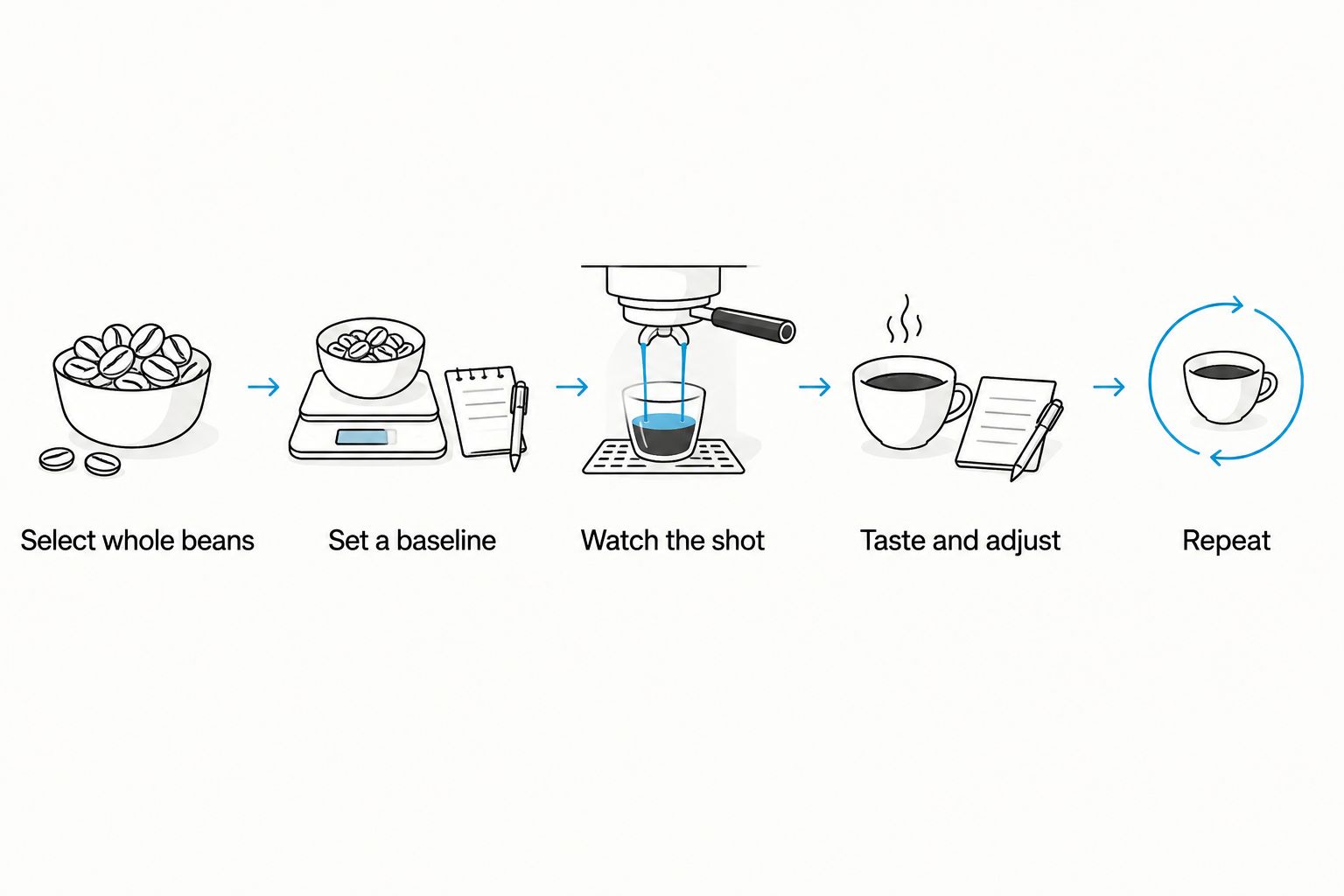
A kitchen scale helps you compare attempts without guessing what changed. Your palate still makes the final decision: keep the setting that gives you a cup you want to drink. The baseline is a way to learn your machine, not a requirement that every shot finish at the same moment.
Where flavored coffee fits
Flavored coffee is a separate taste choice from the unflavored blends ranked above. Cinnamon Hazelnut is an example of a flavored product, but its URL does not establish a roast, grind format, or suitability for a particular espresso machine. Check its current product details before considering it for whole-bean espresso.
If you are learning to adjust your grinder in 2026, begin with an unflavored coffee. That makes it easier to notice what changes when the shot runs faster or slower. After you know the cup you like, decide whether a flavored coffee belongs in your routine. Consult your grinder's care instructions before using any beans with added flavoring.
How these picks were ranked
The order follows the information available, not an invented taste test. 6 Bean Blend comes first because its description explicitly calls it a dark-roast house blend suited to espresso. African Espresso follows as a named medium-dark blend with stated origins. Medium-roast single origin comes last because it is a useful buying path, but no specific eligible product and format are established here.
For a whole-bean guide in 2026, format is a condition for every pick, not an assumption. No supplied description for the two named blends confirms whole-bean availability. The ranking therefore tells you which listing to inspect first based on your roast preference; it does not replace checking the order options.
Which whole bean coffee for espresso machines should you choose?
Choose 6 Bean Blend first if dark roast is already your everyday preference and its listing offers whole beans. Choose African Espresso instead if you want to start with a medium-dark blend. If neither roast sounds right, look for a clearly identified, unflavored medium-roast single origin in whole-bean form rather than buying a named bag on guesswork.
The default choice for an undecided dark-roast drinker in 2026 is 6 Bean Blend, because its description makes the espresso use explicit. The default does not override your taste. If you generally prefer a less dark roast, start your search with African Espresso and check its format before ordering.
FAQ
What's the best whole bean coffee for espresso machines in 2026?
6 Bean Blend is the first pick if you like dark roast and its current listing offers whole beans. Its supplied description identifies it as a dark-roast house blend suited to espresso; whole-bean availability still needs confirmation.
Is 6 Bean Blend or African Espresso better for a dark-roast drinker?
6 Bean Blend is the clearer choice for a dark-roast drinker. It is described as dark roast, while African Espresso is described as medium-dark.
Does espresso require a dark roast?
No, an espresso machine does not require dark-roast coffee. Choose a roast you enjoy, then adjust your grind and recipe to suit the beans.
Can I use medium-roast single-origin coffee for espresso?
Yes, medium-roast single-origin coffee is an option for espresso if you can get it in a format suited to your grinder. Check the specific product listing and expect to adjust your grind when you switch coffees.
Are African Espresso and 6 Bean Blend confirmed whole-bean products?
Their supplied descriptions do not confirm whole-bean availability. Check the current order options for each product before buying either for a whole-bean espresso setup.
What is a starting recipe for home espresso?
A common starting point is 18 g of ground coffee for 36 g of espresso in about 25–30 seconds. Treat it as a baseline and follow your machine and basket guidance when it differs.
Should I choose flavored coffee while learning espresso?
Start with unflavored coffee if you want to judge changes in grind and extraction by taste. Check the product's format and your grinder's care instructions before trying flavored beans.
One last thing
In 2026, the most useful comparison is not the word espresso on two bags. It is your preferred roast, confirmed whole-bean format, and a shot you can repeat. Start with one bag that meets those conditions, keep your recipe steady, and change the grind before you decide the coffee itself is wrong.